.svg)
Biological Soil Crust (BSC)
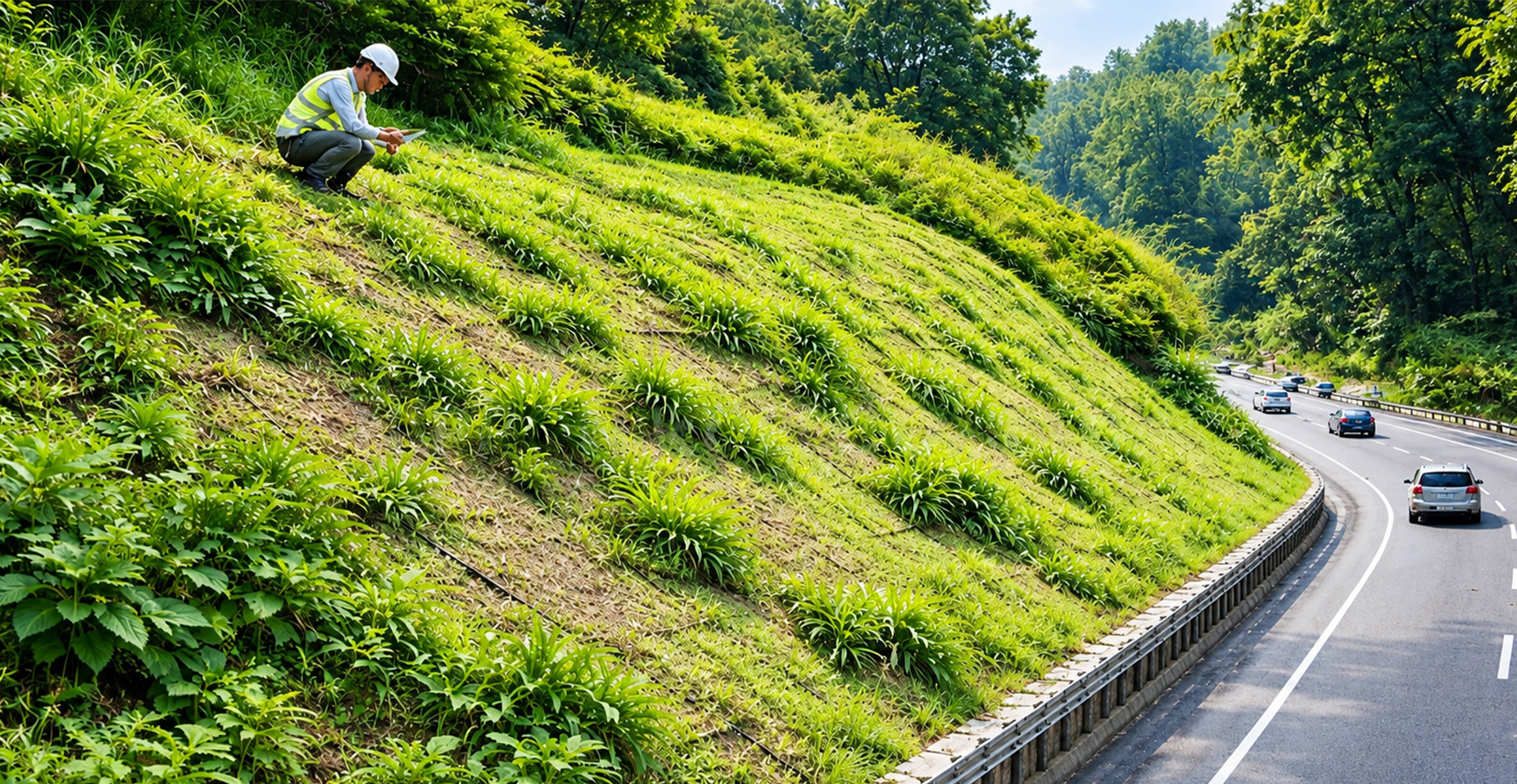
As the infrastructure development continues to accelerate, the transformation of natural landscapes becomes increasingly inevitable. Expanding infrastructure—roads, urban areas, and energy facilities—often requires reshaping terrain that was once stable in its natural state. Slopes, in particular, are among the most sensitive environments, where even minor disturbances can lead to significant risks such as soil erosion or landslides.
Conventional slope protection methods, largely dependent on concrete-based structures, have long provided reliable engineering solutions. However, these approaches may alter the natural character of the environment, introducing rigid forms into landscapes that were once dynamic and living systems.
In response to this challenge, a more balanced approach is emerging—one that works with nature rather than against it.
BSC Method – A Natural Way to Protect Slopes and Support Vegetation Growth
BSC Method is an exo-friendly solution developed by NK in Japan to prevent slope erosion and help vegetation naturally intrude and grow on the soil surface. This method is safe for use even in environmentally restricted areas and protected areas, making it a sustainable choice for slope management and ecological restoration. We provide consultancy services to project owners who require the BSC Method.
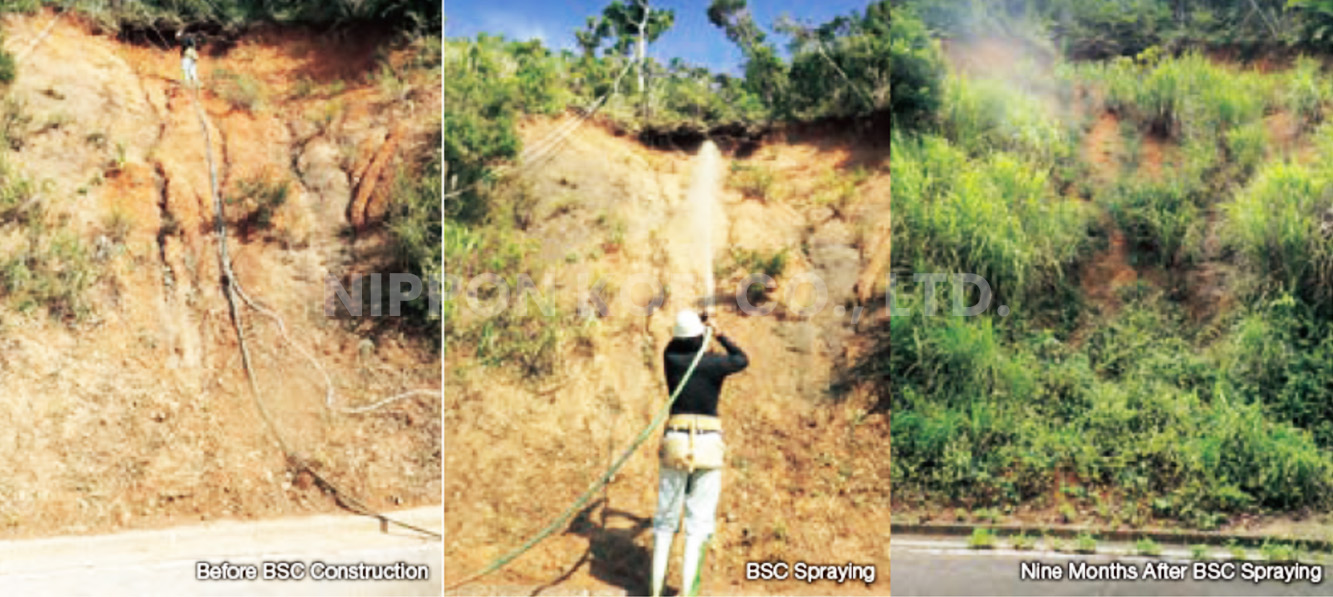
This method uses natural phenomena to create thin and protective layers on the soil surface through the activity of filamentous bacteria, soil algae, lichens, and mosses. This natural crust holds the soil particles together on the slope surface, especially in areas where water tends to flow. The algae used in the BSC Method reduces erosion and creates a better environment for vegetation growth. BSC Method has special features as follows:
• Environmentally Safe: Using algae found worldwide and propagating by cloning, thus no risk to local ecosystems.
• Economically Efficient: Lower cost compared with ordinary natural vegetation intrusion acceleration methods, e.g., vegetation mats/sheets without seeds, including the maintenance cost.
• Easier Implementation: no additional works, such as slope levelling works, earth removal works/earth disposal works, and no maintenance after implementation.
• Ideal for Remote/Mountainous Areas: can be conducted by using drones or helicopters.


.png)
Jakarta Representative Office